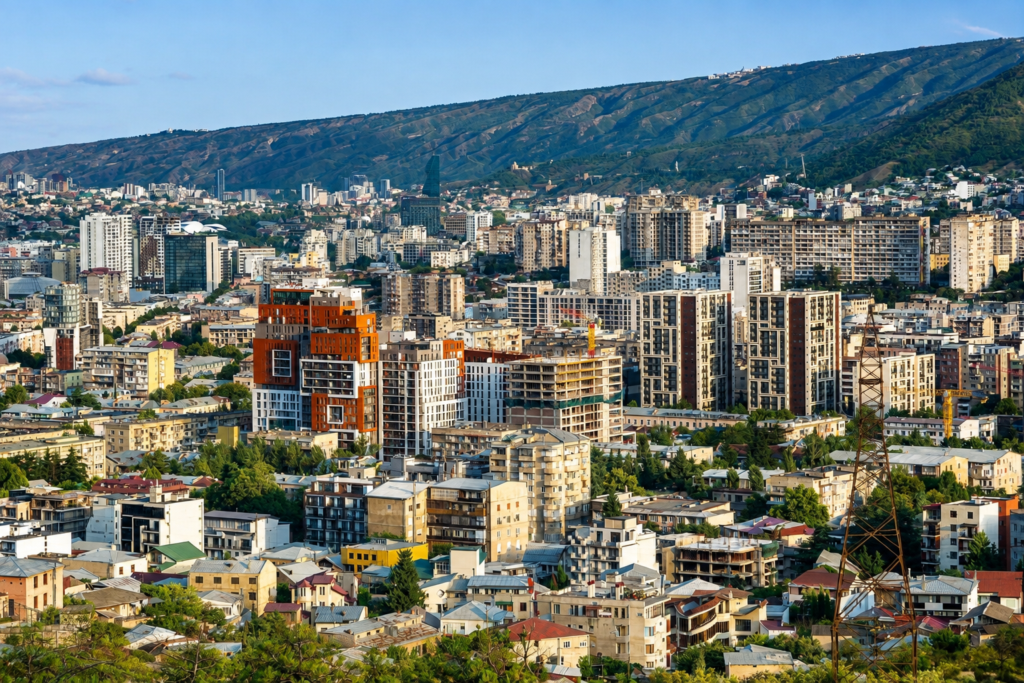
Only a few years ago, investing in Georgian property was far simpler. The market was growing fast, prices were rising in practically every popular location, and strong tourist demand meant you could count on steady income without much analysis. Plenty of investors bought apartments “for the future”, and that strategy paid off.
In 2026 the market has changed. Picking an apartment in a new residential complex, or going by the price per square metre alone, is no longer enough. Quite different factors have moved to the front: the quality of the development itself, the legal cleanliness of the transaction, the specifics of local legislation, the genuine prospects of the area and the property management strategy you choose.
That said, it would be a mistake to conclude that the market has become less attractive. If anything, the opposite is true – it is becoming more mature and more predictable. The effect of frenzied demand is gradually disappearing, and with it the likelihood of haphazard investment decisions. This creates a more comfortable environment for anyone who treats property as a long-term asset rather than a way to make a quick profit on rising prices.
In this article we break down what has changed in Georgia’s residential property market in 2026, which legislative developments foreign investors need to take into account, where the most interesting opportunities are concentrated today, and what to look at before signing a purchase agreement.
Why Georgia’s Economy Continues to Support the Property Market
Before analysing apartment prices, rental yields or the prospects of individual districts, it is worth understanding the economic conditions in which this market is developing.
It is the state of the economy that largely determines how durable demand for property will be over the coming years, and whether the market can keep growing without artificial support.
On this front, Georgia continues to look confident.
In 2025 the country’s real GDP grew by 7.5%, and the nominal size of the economy passed USD 38 billion. According to a forecast by the investment bank Galt & Taggart, the economy will maintain a high rate of growth in 2026 as well – around 6%, which remains one of the strongest figures among the countries of the region.
For the property market, numbers like these have a very practical meaning.
Economic growth goes hand in hand with the expansion of domestic business, a rising number of jobs, infrastructure development and growing purchasing power among the population. All of this creates steady domestic demand for housing, which becomes especially important as the investment frenzy gradually cools.
Another indicator worth paying attention to is the volume of foreign direct investment. In the early part of 2026 alone it rose by 48%, which points to the continued confidence of international business in the Georgian economy.
The policy of the National Bank of Georgia plays an equally important role. With international reserves of around USD 3.2 billion, the regulator continues to smooth out swings in the lari exchange rate, reducing currency risk for businesses and private investors.
Of course, no economy is immune to external factors. But taken together, the current indicators suggest that the foundation under the property market remains solid enough.
Economic stability, though, is only one side of the question. For foreign buyers, changes in legislation matter just as much today. They largely set the minimum investment budget and shape the choice of a specific property.
New Residence Permit Rules: Why Investors Had to Rethink Their Plans in 2026
If economic indicators create a positive backdrop for investment, migration changes have a direct effect on buyers’ practical decisions.
That is precisely why the main event of 2026 for foreign investors has been the new rules for obtaining a residence permit through the purchase of property.
From 1 March 2026, the minimum market value of property required to obtain a short-term, one-year residence permit must exceed USD 150,000.
At first glance the change looks fairly minor. In practice, however, it has noticeably reshaped the structure of demand.
First, a share of the properties that fully met the program’s requirements until quite recently automatically stopped qualifying for a residence permit.
Second, investors have become considerably more careful in choosing property, because a mistake in valuing it can now lead not only to a poor purchase but also to a refusal of status.
The conditions for obtaining a five-year investment residence permit, meanwhile, have remained unchanged. To take part in the program you still need to buy property worth USD 300,000 or more.
This status remains the most attractive option for anyone who sees Georgia as a place to live long term. After five years it allows the holder to obtain permanent residence without additional checks, and at the same time it exempts the owner from having to obtain a separate work permit, which became mandatory for most foreign nationals in April 2026.
There is one more important point that anyone who already holds a residence permit under the old rules should keep in mind.
If the permit was issued before March 2026 on the basis of the USD 100,000 minimum threshold, that does not mean it can be renewed automatically. When the documents are submitted again, a fresh report from an independent appraiser will be required.
If, at the time of renewal, the market value of the property turns out to be below the current threshold of USD 150,000, keeping the status on the basis of the already purchased property alone will not be possible. In that case the investor will have to either buy an additional property or increase the value of the existing investment portfolio.
In practice, it is this rule that has forced many buyers to rethink how they approach the choice of property.
Where the figure stated in the purchase agreement used to be the main reference point, today what matters most is the market value of the property as confirmed by an independent appraiser.
That is why the next stage in any transaction is a professional property valuation – a procedure that over recent years has gone from a formality to one of the most important elements of an investment strategy.
Tbilisi: Why So Many Investors Bet on Long-Term Stability Here
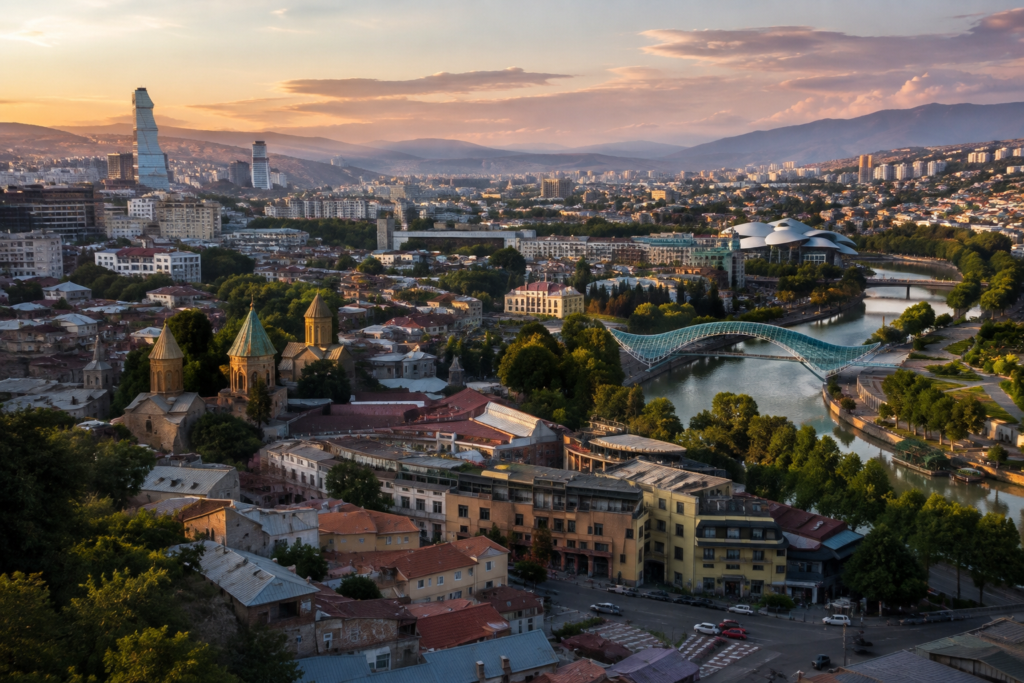
When the Georgian property market comes up, foreign buyers’ attention is most often focused on Batumi. Professional investors, however, increasingly begin their analysis of Georgia with the capital.
The reason is simple: Tbilisi today can fairly be called the market with the most predictable demand.
Unlike the resort cities, property values here depend far less on the tourist season or the foreign policy situation. Around 90% of buyers are residents of Georgia itself, which is why the market holds steady even in periods when interest from foreign investors declines.
It is domestic demand that has become one of the main sources of stability in the capital’s market.
At the same time, it is no longer possible to speak of Tbilisi as a single market.
Over the past few years the differences between districts have become far more pronounced, and growth potential is now determined less by the city itself than by the specific location.
The Most Promising Districts to Buy a Home in Tbilisi
In the premium segment, one of the most expensive districts remains Vake. Apartment prices in new residential complexes here already reach USD 2,178 per square metre.
The high prices are not explained by the district’s prestige alone. This is where the best educational institutions are concentrated, along with well-developed commercial infrastructure and steady demand from affluent buyers – all of which supports the liquidity of property even in the market’s quieter periods.
The picture in Didi Dighomi looks entirely different.
The average price of housing here is USD 1,000-1,150 per square metre, which keeps the district one of the most affordable entry points for investors. Meanwhile, the ongoing development of transport infrastructure and active construction are gradually raising its investment appeal.
The most interesting story today, though, belongs to the Samgori district.
In the early part of 2026 it accounted for roughly 40% of the total increase in the number of transactions in the capital.
The reasons for this growth are easy enough to explain. Several factors have come together here: the development of city infrastructure, the construction of modern comfort-class residential complexes and more affordable price levels compared with the central districts. We looked at the best districts in Tbilisi for investment in more detail in this article. For investors this combination is particularly interesting, because it makes it possible to count on both rising property values and steady demand from tenants.
How Profitable Is Long-Term Rental?
Unlike resort properties, where yields depend heavily on the tourist season, the Tbilisi rental market rests on constant domestic demand.
As of 2026, the average yield on long-term rentals is around 8.1-8.6% per year.
And tenants are increasingly not students or tourists, but specialists at international companies, employees of the financial sector and people from the IT industry.
IT remains one of the fastest-growing segments of the Georgian economy, and its employees currently earn the highest salaries in the country. This creates steady demand for quality housing and reduces the risk of an apartment sitting empty without tenants for long stretches.
For this reason most professional investors view Tbilisi first and foremost as an instrument for preserving capital with a predictable cash flow.
That is exactly what has become the main competitive advantage of the capital’s market today.
Batumi: Higher Yields, but Higher Demands on Your Choice of Property
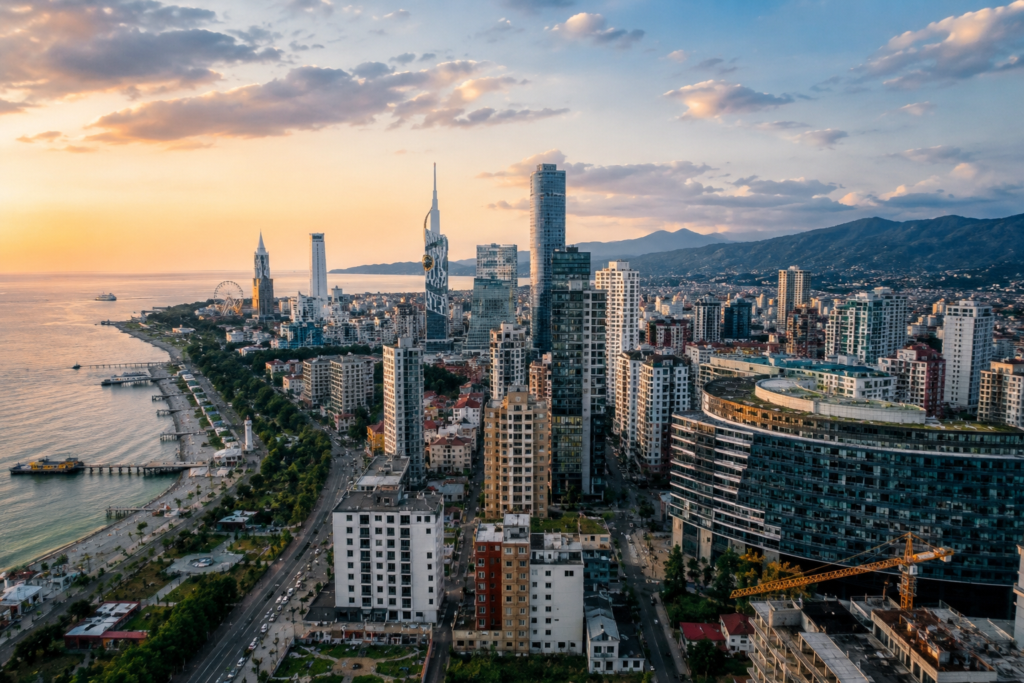
If Tbilisi wins on stability, Batumi continues to attract investors with the chance of higher returns.
The market of 2026, however, is already noticeably different from what it was just a few years ago.
During the construction boom, supply grew so quickly that by the start of the year around 12,400 unsold apartments had accumulated in residential complexes still under construction.
A large volume of supply does intensify competition between developers, but at the same time it makes the market more mature. Where strong demand once made it possible to sell practically any project successfully, buyers today assess build quality, location, infrastructure and the professionalism of the management company far more closely.
In other words, the market is gradually shifting from quantity to quality.
The Main Risk in Batumi Is Seasonality
Another feature of Batumi is how heavily the rental business depends on the tourist season.
According to the latest research, average apartment occupancy runs at about 53% on an annual basis, while roughly 70% of all rental revenue falls in the period from May to October.
For an investor this means that potential yields have to be calculated with several months of comparatively low demand built in.
That is why experienced owners increasingly assess not just the price of the apartment but the development’s ability to attract guests outside the summer season.
Why Branded Residences Are Becoming the New Investment Standard in Batumi
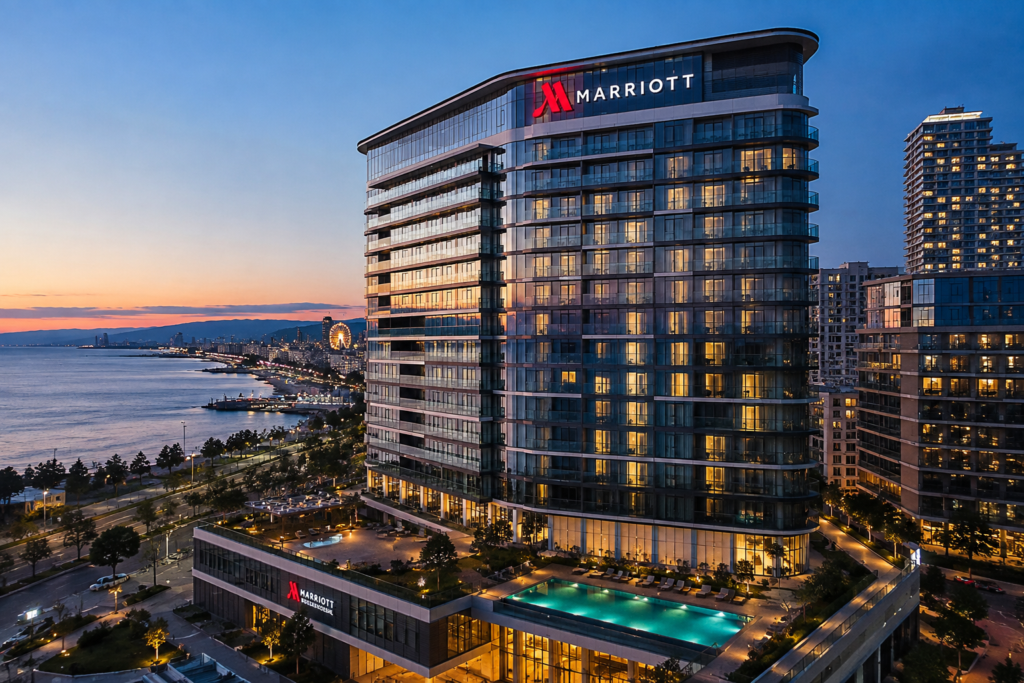
One of the main trends in the Batumi property market in 2026 has been branded residences – residential complexes operating under the management of international hotel brands.
The appearance of such projects is a natural market response to growing competition. When supply exceeds demand, the winner is no longer whoever simply owns an apartment, but whoever can keep it well occupied throughout the year.
That is why more and more investors are handing property management over to professional operators rather than running it themselves.
Projects under the Marriott, Wyndham or Hilton brands attract guests through name recognition, international service standards and their own booking systems. For the owner this means not only a lighter operational load but also a steadier flow of tenants, especially in the off-season.
Naturally, the involvement of a management company affects the final yield, since part of the profit goes towards paying for the operator’s services. Many investors, however, see this not as an additional cost but as the price of lower risk and a more predictable cash flow.
That is why branded residences are gradually moving out of the niche-product category and into one of the most sought-after formats of investment property on the coast.
Which Batumi Districts Look the Most Promising
It is no longer possible to talk about Batumi as a single market. Each district is developing along its own path, and the differences between them are becoming ever more visible.
New Boulevard
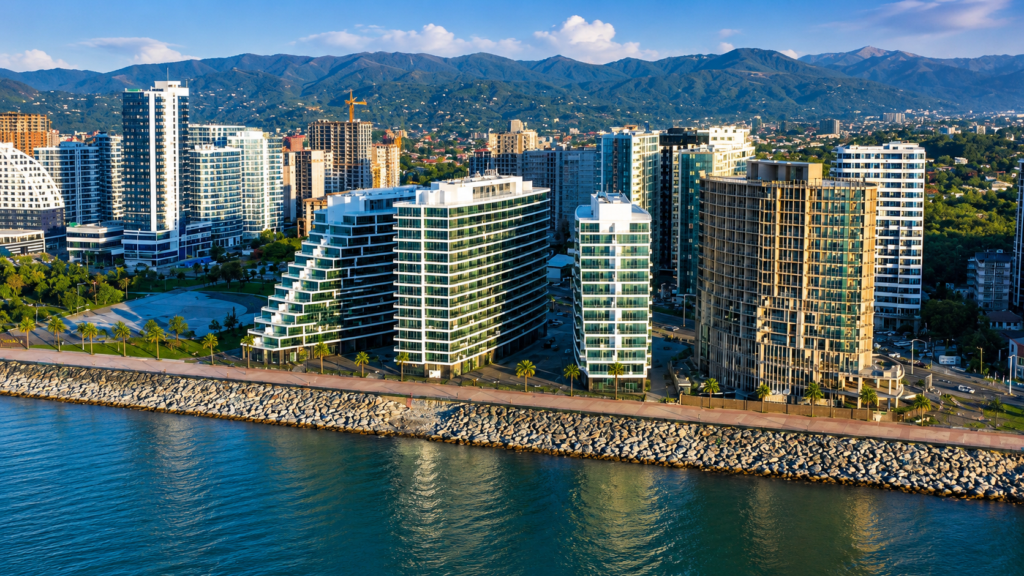
If the task is to acquire the most liquid property possible, most experts look first at the New Boulevard district.
This is where the largest number of modern residential complexes, hotel infrastructure and new commercial projects is concentrated.
In 2025 more than 6,800 transactions were registered in this location, and the average price of housing on the primary market reached USD 1,787 per square metre.
The high level of buyer activity is not explained by proximity to the sea alone. The district continues to develop actively, which is why it retains the potential for further growth in property values.
Gonio and Kvariati
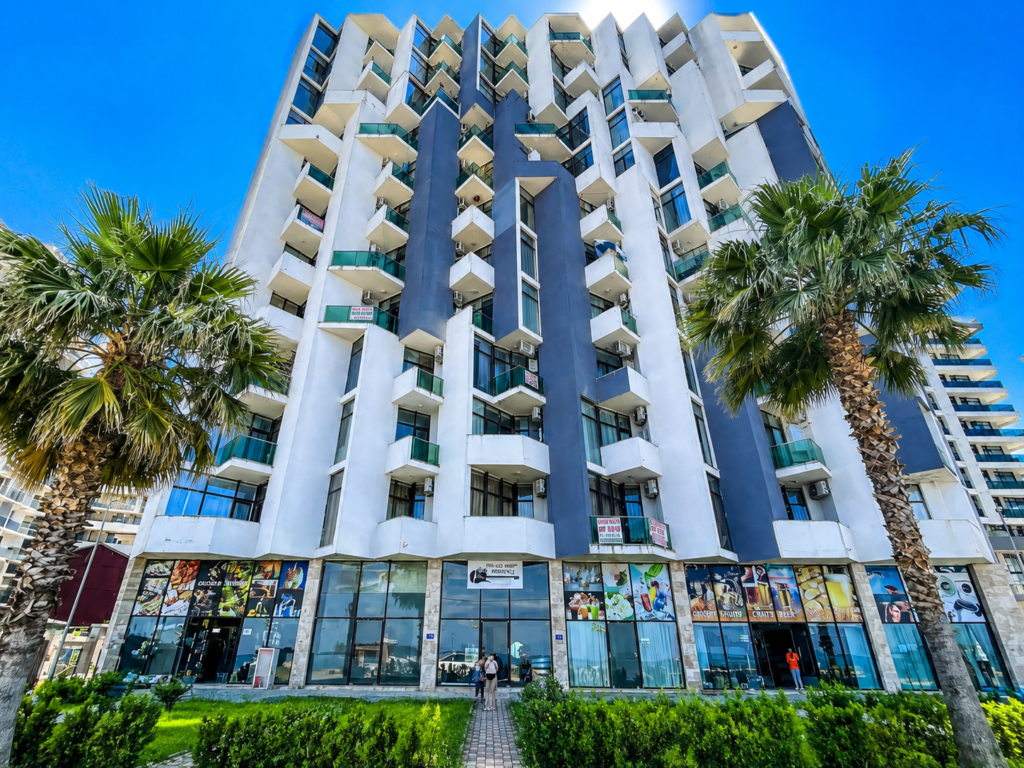
Anyone focused on the premium segment should take a closer look at Gonio and Kvariati.
These areas differ markedly from the central part of Batumi. Lower building density, a cleaner natural environment and a limited number of new projects create steady demand for quality property.
The price per square metre here already exceeds USD 2,000, yet it is precisely the shortage of supply that many analysts consider the main driver of further price growth.
Properties like these are more often bought not for mass-market rental but as a long-term investment or as a home to live in.
Old Batumi
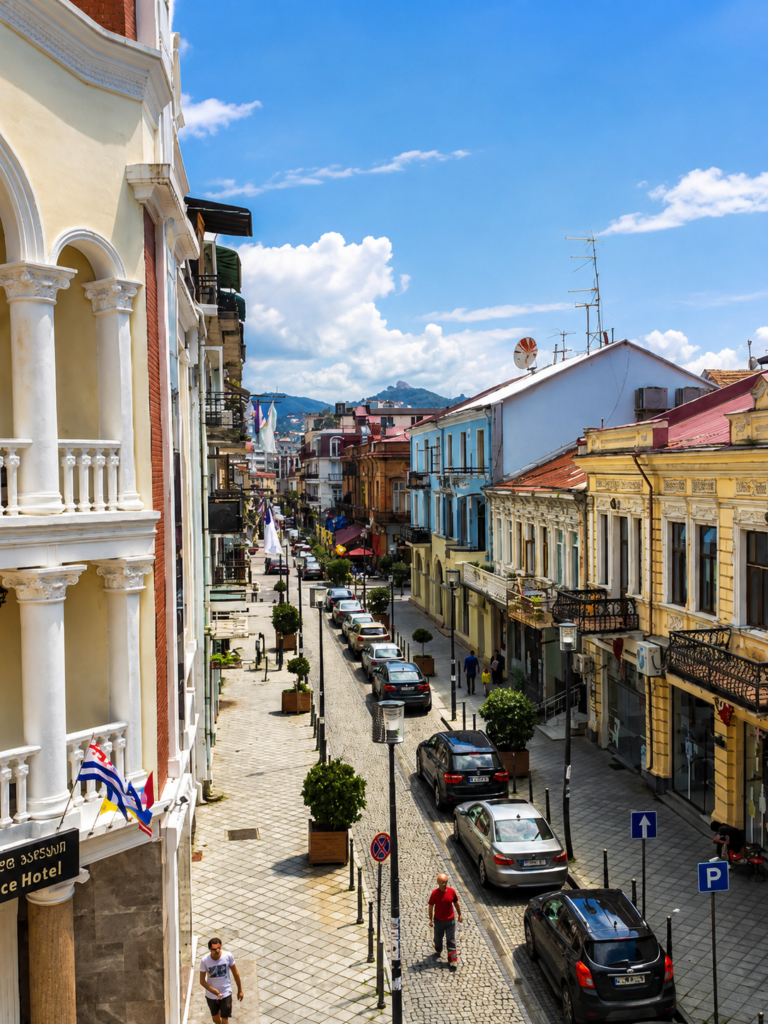
The market in Old Batumi has an entirely different character.
Because so few free plots are available, new construction here is practically impossible, and property values have already passed USD 3,100 per square metre.
Investors come here not for high rental yields but for liquidity and capital preservation.
Properties of this kind face far less competition from new developments and often hold their value even in periods when the market cools.
The Tax System: One of the Georgian Market’s Main Competitive Advantages
Despite the changes in migration legislation, Georgia’s tax policy remains one of the key reasons foreign investors continue to consider the country for buying property.
Compared with many European states, the tax burden here remains significantly lower, and the system itself is much simpler and more transparent. For an investor this means the ability to keep a larger share of income and to forecast future costs in advance.
When property is purchased, the state levies no tax on the registration of ownership. This makes it possible to reduce upfront costs and makes entering the market less expensive.
Property ownership tax depends on the size of the family’s income, specifically income received from sources within Georgia.
If that figure does not exceed GEL 40,000 per year (about USD 14,800), no tax is charged.
Where the combined annual family income is up to GEL 100,000, the property tax rate ranges from 0.05% to 0.2% of the property’s market value.
The taxation of the rental business is another advantage. If the owner is officially registered as a landlord, income from renting out residential property is taxed at a flat rate of 5%, which makes this regime one of the most attractive among popular investment destinations.
The rules on taxation when property is sold are equally accommodating. If an apartment has been owned for more than two years, the profit from its sale is not taxed.
Where the ownership period is shorter, a rate of 5% applies to the difference between the purchase price and the sale price.
Tbilisi or Batumi: What Should an Investor Choose in 2026?
Over the past few years the market has become considerably more mature. As a result, there is no longer a universal answer to the question “where is it better to buy property?” Everything depends on the investment objective you are trying to meet.
If the Main Goal Is Steady Cash Flow
The most predictable choice remains Tbilisi.
The capital rests first and foremost on domestic demand, which is far less dependent on the tourist season and on external factors. That is why long-term rental here remains one of the most stable instruments for generating passive income.
Particular attention should go to Samgori, Saburtalo and other districts where transport and social infrastructure continues to develop.
If the Priority Is Growth in Property Values
In that case it is worth studying individual districts of Batumi closely.
Choosing a property purely on the strength of attractive renderings or a promised yield, however, is no longer enough. It matters far more to assess the developer’s reputation, the quality of the management company, the prospects of the specific location and the complex’s ability to sustain demand not only in summer but throughout the year.
Projects with international hotel management and well-developed infrastructure look particularly interesting.
If the Property Is Being Bought to Obtain a Residence Permit
Here, particular attention should be paid to the market value of the property.
Even if the purchase price meets the requirements of the legislation, the final decision will be made on the basis of an independent valuation. That is why checking the property in advance, before the contract is signed, is becoming a mandatory part of the investment process.
If the Main Objective Is to Preserve Capital
It is worth giving up the search for “the cheapest apartment with the highest yield”.
Experience shows that over the long run, properties in high-quality residential complexes located in sought-after districts and carrying high liquidity perform considerably better. These are the assets that are easier to rent out and simpler to resell, and they are less exposed to price swings in the market.
Key Takeaways: What Investors Need to Remember in 2026
When choosing a property, it is important to take into account its real market value, its legal standing, its potential yield, the quality of the development and the options for managing it afterwards.
Strong demand on its own no longer guarantees a successful investment. The outcome depends increasingly on the characteristics of the specific property, on economic indicators and on an understanding of long-term market trends. A purchase decision should therefore be based on calculations and on an investment strategy chosen in advance.
Georgia remains an interesting destination for property investment, but the choice of property here plays a decisive role.
If you are planning to buy property in Georgia and would like to find something that fits your goals, the PB Property team will be glad to help. We support clients at every stage – from market analysis and property selection to legal and technical due diligence, closing the transaction, residence permits and the ongoing management of the property.
Leave a request using the form below to discuss your situation with one of our specialists.